Uncategorized

Every Item Tells A Story, But What is the Lesson?

What a week! On Friday, I woke up feeling that bone deep exhaustion. You know the kind where you can barely keep your eyes open and you feel like someone has kicked you in the stomach. That’s how I felt, but I had to get up, meet the team and go see more patients. I made it through the day but had to hide away and sleep immediately after dinner.

I love my job but sometimes it has the capacity to knock me down. At first, I blamed it on the fact that it was a full week back right after the holidays but I didn’t really stop over the break, so I don’t know if I can blame it on that. I wondered if there is something wrong with me. Why can’t I make it through a week? Then I emptied my pockets.

My pockets really aren’t that big. I have a light winter jacket with 2 pockets and a pouch in my scrub top. I rarely carry much in there besides my keys and my phone, so when I took out one item and then another and another, just like a magician’s hat, I knew that it must have been a crazy day. That’s what happened almost every day this week. I had syringes, and needles and gauze, oh my.

Every item in my pocket told a story of what my day had been. I looked at this collection of items and reflected on each day. I had gone on more appointments alone than usual. I had more sad cases and a disproportionate number of euthanasias. I had to do more physical work than usual and my mental energy had been drained from difficult cases, many of which I couldn’t make better. No wonder I was exhausted.

I realized that I had pushed my own boundaries. I had forgotten to take care of myself first.

Now, I will spend the weekend catching up. I will get to bed on time, drink lots of water, eat my vegetables, exercise and make time to catch up with friends. I will start to feel better, but only until next time, unless I learn the lesson that this week is trying to teach me. Rather, than catch up and care for myself after I have been depleted, I need to remember the lessons of self care each and every day. I need to listen to my body and the weight of my pockets before they become to heavy to carry.

I want to be there for everyone who needs me at every point, but that isn’t always possible. I need to remember that if I don’t take care of myself first, I won’t be able to take care of anyone else. This is the same for many of my clients. Often they are caring for very ill, often terminal pets. It can be a full time job making sure that a sick pet is well cared for. I remind them to take care of themselves as well. We encourage them to ask for help when they need it and take breaks and live a healthy lifestyle. Caring for the ill is about self-care just as much as it is about caring for others.

Each item in our pockets tells a story of our pet, our family, our friends but the lesson is about ourselves. It is a lesson of self-care and wellness. In order to care for our loved ones we need to first care for ourselves. Eat well, sleep, stay hydrated, exercise and set boundaries. If it seems like there is too much going on and that self-care is an impossible task, then it is more important than ever.

What is in your pockets? What are the things that are weighing you down? What are you doing to take care of yourself so that you can continue to care for those who need you? We want to know your favourite self-care ideas.

Author: Dr. Janet Henderson
Uncategorized

A New Year, A New Dog (Weight Loss Resolution)

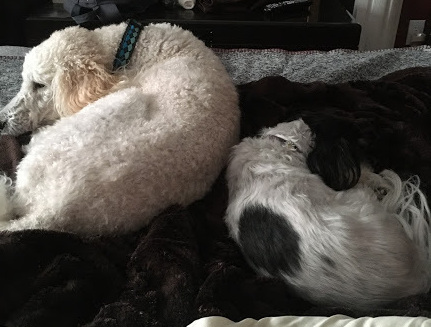
Have your pets made any Resolutions for the New Year? I think that Daisy’s is to get even more cuddles than last year, and Sprocket? Well, he hasn’t let me know but I’m hoping that it’s to eat less socks and other odd things.

It’s not unusual for resolutions to be about becoming healthier and we think that’s a great resolution for our pets as well. Obesity is a very real problem in our pets and so making a resolution to get them in shape can reap tons of benefits. Not to mention that it can double up to get us more active as well. Today’s blog is about just such a resolution that took place a couple of years ago.

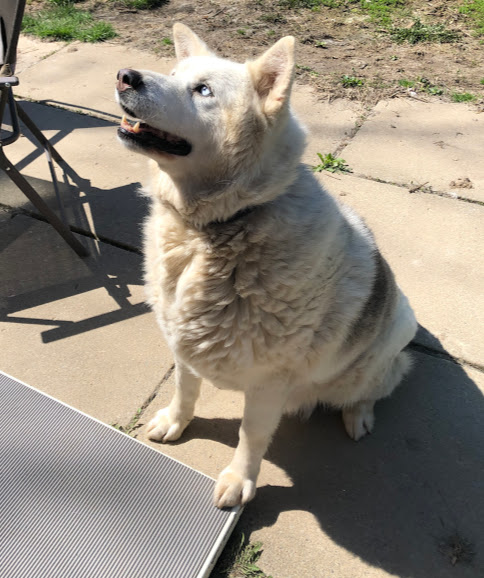
During a routine examination, we met a couple of beautiful female Huskeys, Winter and Bianca belonging to Mark. He loved his dogs so much and wanted the very best for them. They loved being outside more than anything so they spent a lot of time outdoors summer, winter, spring and fall. Mark was under the impression that because they spent so much time outside in the winter they should have a little bit of extra fat covering their bones. He didn’t skimp on their food and liked to keep them a little chubby. However, when we examined the girls, Mark was shocked to learn that they were more than a little chubby and that we were concerned about their health.

As in humans, excess fat can accumulate around organs contributing to a variety of health concerns, including: 

  1. Heart disease
  2. Respiratory Disease
  3. Difficulty exercising
  4. Joint Disease
  5. Skin Problems
  6. Reduced ability to fight infections, 
  7. High Blood Pressure
  8. Diabetes
  9. Increased Risk during anesthesia
  10. Even Decreased Life Expectancy by 2 years.  

Mark was shocked!  “Wow, I had no idea!  Of course I don’t want any of those things for my girls.  I want them to live long healthy, happy lives.  I have noticed that they don’t like to go for walks as much as they used to, but I thought that was just because they are getting older.  Do you think that it could be to the extra weight they are carrying?  What can I do now?”   

We discussed calorie restriction and foods formulated specifically to aid in healthy weight loss.  We didn’t want them to lose the weight too quickly but it was important that they lose it.  We created a nutrition plan specific to each dog which included their daily meals as well as the exact calories in treats they were allowed to eat.  We didn’t want to deprive them of their special treats, just be cautious about how much they were eating.  

“They are always hungry, though.  How can I reduce their feeding size, they’ll starve?”   We discussed that although they may eat all of their food, it may not necessarily mean that they are actually hungry.  We also discussed how some prescription foods will help them to feel full with fewer calories.  

“Another important aspect of weight loss is enrichment” we explained to Mark.  “Sometimes pets will eat out of boredom or just because the food is available.  We will help you to set up an enrichment plan for the girls so that meal and treat time is more exciting for them.”  

We also developed an exercise program for the girls including specific exercises for home when the weather was too bad to make it for a walk and again to encourage enrichment in exercising, rather than the same thing every single day.  

In looking at the whole dog we were able to create a program that included the nutritional needs, exercise needs and mental health needs of each.    

Feeling lighter and more active
We can see a waist

As time went on, we were able to adapt our plans accordingly. Bianca was more stubborn and wasn’t interested in some of the exercises so we worked to find the ones that she did like and added and adapted those accordingly. Winter was more compliant and enjoyed all of the exercises. Mark was able to keep up with the plans we implemented and it wasn’t long before we were starting to notice a waist forming on each of them. Winter lost more quickly but with time Bianca caught up. After 2 years of sticking with their programs, both dogs have decreased their weight dramatically and are much healthier. They can not wait to go on their walks, are walking longer and are not begging for food at all. Mark was happy to announce that he feels fitter and healthier too with all of the walking he is doing with them. Win, win!

Mark does such a great job at taking care of his girls and we are so happy that we were able to contribute to this journey of health.

Has your pet ever had success with a resolution? We’d love to hear about it in the comments!

Author: Dr. Janet Henderson

Uncategorized

Palliative Resolutions in a New Decade

As the new year begins, I am caught contemplating what it will mean for us as we continue to serve you, our clients and patients.  During the past decade my tiny one woman business has grown to a dedicated team which is very passionate about helping pets live their best lives right up until their final days.  I am so lucky to be surrounded by this team on a daily basis, they are all amazing people who truly care about people and animals alike.  All of us have all been working hard to improve our knowledge base and skills through continuing education courses and certifications in order to serve you better.  

My goal has always been to assist you in providing the very best care for your pets.  This year, I hope to be able to do that through an extension of our hours and services.  We have added an additional evening for appointments and in the coming months we hope to have our new tele-health service up and running so that we can help you provide the care your pets deserve, even if we can not make it to you right away.  

Personal and professional growth is very important to me.  Without continual learning and an open-mind we can not reach our true potential.  During recent years, I have been introduced to veterinary palliative medicine and it has become very important to me to assist clients and patients trough these final stages of their journey together.  It is my belief that we have a long way to go in educating people about the benefits of palliative medicine, so as we move forward into the coming decade I resolve to look for as many opportunities to educate as I can.  I will continue to write in this blog but I also welcome opportunities to speak on veterinary palliative medicine to pet lovers and veterinarians alike.  Palliative care has made a huge difference in the lives of many of our clients and patients and my goal is to ensure that everyone who feels the need for this service knows that it exits.  

I’d love to hear what resolutions you have made for the coming year or even decade.  Do any of them involve animals?  Please let us know in the comments.  

Author: Dr. Janet Henderson, Palliative Care Veterinarian