Blog Feed

Veterinary Palliative Medicine

Your Pet has Cancer, Call Me When He Stops Eating

*Trigger Warning – This article deals with pet loss*

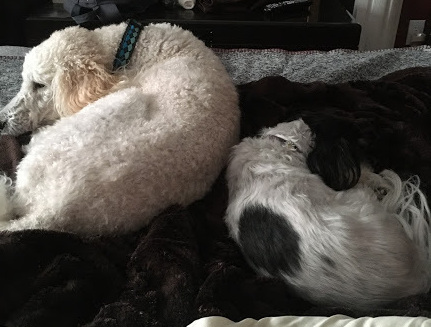
I knock on the door and am welcomed into a cozy comfortable home. I introduce myself while looking into the glistening eyes of the woman who invites me deeper into her home. She leads me to the living room where the rest of the family is seated by a glowing fire and an old white poodle curled up in his bed. He lifts his head to look at me but then places it gently back down on his front legs. He is weak and showing signs of pain. He looks as if he’s had enough.

I sit down on the floor beside my patient and converse with his family. I ask them what’s been going on.

“He has cancer.” They say. “He was diagnosed 3 months ago, and has been on a medication for pain control”. They are fuzzy on the details.

“Which kind of cancer?” I ask. “In his belly” is all that they know. “The vet told us to come back to them when he stopped eating” they state, “but we wanted him to pass at home, so we called you.”

These statements sadden me. There is so much more that could have been done for this patient between the diagnosis and this point. At first, I am angry at the veterinarian but then I take a step back. Do I think that this is what the veterinarian really said: “He has cancer, call me when he stops eating”? No, I have much more faith in my colleagues than that. Veterinarians care so much about their patients and what they do. Do I think that is what the family understood and was able to take in at that moment? Yes, I do. I believe that stressful news numbs our senses and makes it impossible to hear or remember all of the details.

As a hospice and palliative care veterinarian I have heard this statement or similar ones to this, more times than I can count. Through my experience and education, I have learned that families need much more support during this time than most veterinarians are able to extend in their busy schedules. It is not as if they do not care or do not want to help, it is just not always an option or something they can accommodate in their regular practice. This is where I come in.

The Diagnosis:

Let’s look at another patient. We’ll call him Buddy.

Buddy was a black lab who lived with his family which included a husband, wife and 2 children. Buddy grew up with the kids and was loved very much. He had always been very happy until one day he stopped eating. He went to his veterinarian and was diagnosed with an aggressive form of cancer on his spleen. The veterinarian had a long discussion with Mary, the wife, about Buddy’s condition and what to expect. He gave her different options ranging from a referral to a veterinary oncologist to euthanasia. There was a lot of information and Mary went home with a headache and without making a decision.

At home, Mary still felt overwhelmed. She tried to tell her husband, Scott, what the veterinarian had said but she could barely remember anything and emotionally, she wasn’t prepared. She kept thinking about life without Buddy. He had been with her through so much. She worried for herself and for the kids. They didn’t know a life without Buddy. How would they manage. Buddy was such an integral part of their lives.

Once the kids were put to bed, Mary pulled out the information her vet had given her and found my card. She briefly remembered her vet telling her about me. She wasn’t sure if she had the strength to call but she gave the card to Scott. He made the call and we set up an appointment to meet at their house.

The Palliative Appointment

It was one of those cold, windy days when the air seems to bite at your cheeks but it was warm and cozy inside Buddy’s home. Mary and Scott invited me into the living room where the kids were playing on the floor. I made myself comfortable on a chair and Buddy made himself comfortable on my feet. He was a very lovable guy. We all talked for quite some time about what the family understood was wrong with Buddy. We talked about their fears and their expectations. We also discussed what would help them feel better, more in control and what they were able to accomplish. I reviewed Buddy’s medical record and performed an examination on him. We tweaked some of his current medications and the family decided to pursue a referral to a specialist.

Further Care

We worked with the specialist to provide the best plan for Buddy. He received specialized care from the oncologist and his primary care veterinarian and I worked to ensure that Buddy’s quality of life was not suffering and that the family was able to continue along with the initial plan. We did adjust the plan a few times along the way and Buddy had a great quality of life for some time. However, the family knew that he would not continue on this way forever so they set up an appointment to discuss the final stages of Buddy’s life.

Memorialization

The family wasn’t exactly sure what they wanted but they knew that they wanted something special for Buddy. He had been an amazing dog and they wanted to acknowledge and memorialize him to the best of their ability.  It wasn’t time to say goodbye yet, but they wanted to be prepared. We had discussed different ideas for memorialization. They were surprised at many of the ideas we shared with them:

  • Professional Photographs
  • Portraits
  • Pawprint impressions, in ceramics, tattoos, garden rocks
  • Donations to charities
  • Printed Items, such as blankets, mugs, t-shirts
  • Renditions in felt, copper, etc
  • Leash and Collar crafts
  • Special urns for remains
  • Memorial Jewelry
  • Memorial services
  • and many more

Mary and Scott let the kids decide which type of memorialization felt right for them.

Planning for the End

Mary and Scott had each had pets as children but had never had to make the decisions that surround the end-of-life of a pet. They were understandably anxious about making these decisions for Buddy so we worked with them to determine what they felt was best for their family. Ideally, they wished that Buddy would pass away quietly in his sleep but unfortunately, this is not often the case;  we hoped for this,  but planned for other scenarios. We spent time with all of the family members learning about their expectations and their fears and addressed them all as best as we could. We discussed all of the options available to them and the consequences of each. The family created an optimal plan for them as well as plans B and C in case things didn’t go as expected. These plans were communicated with each of the team members including the primary veterinarian, the oncologist, and the family’s support system.

The End

In the end Buddy was euthanized at home. He passed very peacefully on his favourite bed with Mary, Scott and their oldest child surrounding him. He was sent off with nothing but love. Candles were lit and gentle music was playing in the background. The family was sad but at peace with the decisions they had made and the route that Buddy’s journey had taken.

Not Really the End

Of course this is not really the end. Some of the toughest times come after this final goodbye. There are constant reminders of the loss and anniversaries can heighten all of the grief, bringing emotions bubbling back up to the top. Our team kept in touch with each of the families mentioned above. We offered support through phone calls and e-mails but for each family there came a time when that wasn’t enough. We were able to refer them to appropriate grief counsellors who helped them work through their emotions and move forward. We know that grief never goes away but we help people manage it and move forward.

Knowing that a new pet can never replace an old one, Mary and Scott did eventually adopt the cutest new puppy when the whole family was ready.

We are so grateful to have been invited to support each family during such difficult times and are committed to continuing to improve the journey from diagnosis to passing.  

We can not change the outcome, but we can affect the journey.

— Ann Richardson

Author: Dr. Janet Henderson

Veterinary Palliative Medicine

Saying Goodbye During COVID

Our pets play such an important role in our lives.  They are often there for us when no one else is.  They can be our best friend and companion or a connection to others with a shared experience.  Pets rely on us and offer us unconditional love.  Our daily routines are set around them.  Our pets give us a reason to get out of bed in the morning and they often remind us of this if we are late to feed them.  They remind us not to work too hard.  I know that if I sit at my desk for too long, my dogs are sure to remind me to play ball or go for a walk.  They make us laugh and sit with us when we cry.  

All of this and much more can make saying goodbye excruciating.  We understand that we are doing the best thing for our pet, by alleviating pain and suffering but it doesn’t really make it any easier on us.  Our team understands this and so we have been dedicated to assisting you particularly during this difficult time.  We have encouraged pet families to be as involved in the decisions surrounding end of life as possible.  We encourage a ceremony that best suits everyone involved.  Rituals and planning can aid in the healing process caused by the grief of loss.  

During the COVID 19 Pandemic many of our families have noticed that these rituals have become more challenging.  As with everything, there are new restrictions in place at veterinary hospitals to protect everyone’s safety.  We all agree that these restrictions are reasonable and necessary but some families are struggling with them all the same.  We recommend that each family contact their veterinarian to learn of their specific regulations to understand what will take place at their appointment time.  


We want you to know that we are here to continue to support our pet community. Our appointments might look a little different but our goals for a peaceful farewell are still the same. We have been getting a lot of questions about what an end-of life appointment will look like at this time so we wanted to take a minute to let you know what changes you might see from us.  

At the present time we are not entering homes so all meetings will be outside.  We will discuss as much as possible with you on the phone prior to your appointment and will meet you outside when we arrive .  A few people have been concerned about this but we can say that being outside surrounded by nature can have a calming effect on pets and their people, especially on a bright sunny day in the shade of a tree while the birds chirp above.  We continue to offer you the time you need with your pet and encourage you to include any rituals, such as music or prayer that make sense to you.  

We will visit you as a team of 2 so we ask that you do not have more than 8 family members present, allowing us to stay within public health guidelines.   We also ask you to respect social distancing rules.  We will come prepared with masks and gloves for ourselves, and we will ask you to step back a couple of times but otherwise we will stay distanced to ensure that you are with your pet as they slowly drift off to sleep.  If at any point you need more time we are able to accommodate that, just let us know.  

Although you can definitely follow us to the car we do ask that you allow us to carry your pet and place them into the comfy dog bed in our vehicle, to prevent cross contamination into or from the vehicle.  We will continue to treat your pet as lovingly as if s/he was our own.  The crematorium has on-line services so that you can choose any options you prefer from the comfort of your own home without outside contact.  Of course, we are only a phone call away to assist with anything that you may need during this process.  

Just as before the pandemic, in the time following any euthanasia will stay in touch to support you through your grief where needed.   We know that this isn’t easy.  We have been there ourselves and we want you to know that you are not alone, even when all of us are feeling the strain of social isolation.  

Dr. Janet Henderson

Uncategorized

Puppy Love in the Time of COVID-19 – Adopting a Puppy during Social Distancing

Getting a new puppy is always an exciting adventure. The excitement of a cute tiny being taking over your life and your home and what better time than during social distancing than when you are forced to stay home, right? Well….Let’s just say maybe.

First of all, it is important to remember that a puppy is a long term commitment and will be around a long time after things return to a more normal state. If you weren’t thinking of getting a puppy before you were home this might not be the right time either.

But what if you were planning to get one within the next year or so, isn’t this the perfect time to do it since you will be home to train, bond and play with the little ball of fur?

Training a puppy is definitely easier when you are home.  As far as it being a good time to get a puppy now, I would have to say “yes” and “no”, but probably not.

Pros to getting a puppy now is that you will have the opportunity to take the puppy out more frequently in order to house break him/her.  You will also have a lot of time to exercise, train and bond with a new puppy.  You will hopefully get through that very intense puppy stage before you return to work full time again.

A puppy can also act as a distraction and give you a sense of purpose in a time when things may not be quite so routine. Distraction, routine setting and unconditional love seem to be a puppy’s forte. Your mental health may be positively affected through the care and training of a new little friend.

On the other hand:  1. The most important thing at this time is respecting social distancing and only leaving the house for essential reasons. It is difficult to social distance to pick up your puppy from the breeder and traveling to the breeder also puts you and others at risk of accidents on your way to and from.

2. Dogs are social beings but they need to be exposed to a lot of situations, people and pets early on in life.  The more things that they are exposed to in a positive way when they are young, the better adjusted and less anxious they tend to be.  If you plan to take your dog to a lot of events, meet a lot of people etc. when they are older you would want to socialize them as a puppy.  This can be very difficult if not impossible with social distancing.  However, if you are a homebody or plan to leave your dog at home when you attend events this may not be as much of an issue.  

3.  Groomers are closed during this time and Veterinarians are only providing essential or urgent services, depending on your location so it will most likely be difficult to ensure that your puppy is healthy and dewormed. It may be impossible to get your puppy vaccinated which can leave your puppy vulnerable to infectious diseases. If you keep your puppy inside and are able to do some basic grooming yourself then this may not be an issue.

Can dogs carry the novel coronavirus?  There has not been any evidence that dogs can transmit the virus, however, just as your hands could spread the virus if they came in contact with it there is a risk that your pet’s fur could possibly do the same.  That is IF an INFECTED person coughed on, sneezed on, or petted your dog the virus particles could be on their fur and then could be transmitted to the next person who petted him/her.  At this time we are recommending social distancing for pets as well to prevent this from happening.  We also recommend that COVID-19 positive patients do not care for their own pets to prevent this.  

If you do decide to get a puppy at this time, I would recommend a video-conference with a veterinarian to help to answer your questions and be sure that you are keeping your puppy as healthy as possible until they can be examined by a veterinarian. Your veterinarian can help you choose a healthy diet and discuss preventative care you can do at home. They may also be able to help with parasite treatments and preventions which are especially important this time of year.

Since groomers are closed you will want to have some grooming products on hand such as a brush, comb, shampoo and nail trimmers and learn to do these things yourself. This will help to keep your pet healthy and train your puppy that these things can be fun and rewarding.

Other products that are important are bowls (stainless steel or ceramic are best as some dogs react to plastic). leashes (not retractable) and a comfortable collar or even better, a body harness.  

Indestructible toys are also important to redirect chewing.  Toys which you can line with a thin layer of peanut butter or cream cheese and treats can be put it in the freezer to extend the chewing time.  I don’t recommend anything that is very hard plastic or that has pieces, such as eyes that can be chewed off.  

It is also important to consider the costs involved with caring for a puppy, an adult dog and a senior dog. You can discuss these costs with your groomer and veterinarian for a better idea of what your new puppy will cost now and as he/she ages.

Pet Insurance is a good way to mitigate emergency and other unexpected veterinary costs. Premiums are different depending on breed, your location, the plan you choose and the company you choose.  They should each have a website and 1-800 phone number to help you decide which is best for you.  Some questions to ask include: 

  • 1. What do you cover? 
  • 2. What is the deductible? 
  • 3. When does the deductible reset?
  • 4. Is there a maximum coverage?  
  • 5. Is the maximum for an individual organ system or for the whole pet. 
  • 6. Does the Maximum ever reset?  
  • 7. Do I need pre-approval?
  • 8. Do you pay me or direct to vet?  
  • 9. Any other questions that are important to you.  

Some of the companies we see frequently are:  Trupanion, Pet Plan, Pets Plus Us (also available through Costco), Pet Secure.  

If you do choose to get a new puppy, we would love to see your pictures and hear about all of your furry adventures.

Take care and Stay Safe.  

Dr. Janet Henderson 

416-895-7164

Uncategorized

Veterinary Medicine as an Ontario Essential Business as of April 4, 2020

We are missing our patients at this time of Social Distancing. We had made the difficult decision to stop house calls for the time being and yesterday our provincial government has asked that veterinary stop all in person services except for those which are urgent. Scheduling only urgent house calls is not realistic for us, but we are still available.

We want to make this clear. Although we are not making home visits Dr. Henderson is still available!  She is offering advice and support through video-conferencing.  (Download the VetNOW app)  This is allowable within the provincial essential business model.  

If you are not familiar or comfortable with video-conferencing she is also only a phone call away.   We will still ship or drop off your medications.  Pet food and supplies can be purchased and delivered to your door through our webstore as always. 

In the event that we can not help you through Video-conferencing we will direct you to an appropriate clinic that can help you.  Please be advised that the clinics we refer to are working on a locked door, curb side policy where you stay in your car and call the clinic from the parking lot.  Staff will then direct you of the next steps, which often involve a team member coming to get your pet while you stay in your car.  

An Important Note about Parasite Prevention

Unfortunately, ticks, fleas and other parasites will not be self-isolating during this time so if your pet is still going outside (even in the backyard) we recommend that they start on parasite prevention.  This is particularly important this year as obtaining treatment for parasite borne infections may be more difficult.  We encourage you to contact us to have your parasite prevention sent to you as soon as possible.  

An Important Note about Annual Exams and Vaccinations

If your pet is due or overdue for their annual examination or vaccinations please do not panic.  These vaccinations are meant to protect you and your pet but at this time it has been determined that the risk of COVID-19 is higher.  We do urge you to take precautions to decrease the risk of your pet contracting these diseases until we are able to perform vaccines again.  

  1. Keep your pet inside as much as possible.
  2. Do not allow your pet to go outside alone
  3. Avoid contact with other animals, including pets and wildlife
  4. Prevent your pet from eating and drinking things found outside. 
  5. Wipe your pets paws when you come in (AND THEN WASH YOUR HANDS)
  6. Do not allow others to pet your pet for the time being 
  7. Basically have your pet practice Social Distancing and Good Hygiene as well.

We are still able to do a virtual annual consult to address your concerns.  Just call us to book a time.  

We will keep track of everyone who is overdue and will contact you when we are once again available to provide preventative and routine care.  

An Important Note about the Webstore

Due to hoarding of food and supplies the webstore has had some delays in delivery.  We ask that you only order what you need but consider ordering a week or more in advance of when you need it.  

We miss you all and are thinking of you during this time.  Give your pets some extra love from us and reach out with any questions or concerns at all.  

Dr. Janet Henderson 

416-894-3871

416-895-7164

info@cvhousevet.com

PS  

We have a new website.  We’d love it if you checked it out and let us know what you think.  

cvhousevet.com

Public Health

COVID-19 (Coronavirus) and our Pets

COVID-19.  Novel 2019 Coronavirus.  

In December 2019 the world learned of the Novel Coronavirus COVID-19 and since then it has spread across the globe.  Although, at this time we are at a very minimal risk here in Canada, experts do think that it is only a matter of time before it becomes endemic here as well.  People are starting to take precautions and planning for illness and quarantines.  As a matter of fact it is impossible to find any hand sanitizer for sale in my small town as people stock up in the hopes of preventing infection.  

But what about our pets?  Can they contract this COVID-19?  Can they spread it?  Although this specific coronavirus is a new mutation, coronaviruses themselves have been around for quite some time.  As a veterinarian I am concerned about different coronaviruses in different species but the fact is that each of these viruses is species specific.   For example the feline coronavirus that results Feline Infectious Peritonitis is only found in cats and the canine coronavirus which results in diarrhea in dogs is only found in dogs.  These viruses do not cause disease in any other species, unless the virus mutates.   This is most likely the case with COVID-19 as well so it is unlikely to infect our pets.  

What about the dog that tested positive in Hong Kong on February 27, 2020?  To be fair, we don’t know what the true meaning of the test is at this point as investigations are ongoing, but at this point the dog in question has not shown any clinical symptoms of illness.  It is being cared for under quarantine and is continuing to be monitored and tested.  There is no evidence that pets can spread the COVID-19 virus, however it is always best to take precautionary measures during any illness.

Many of the precautions that we recommend include general precautions that should always be taken when handling pets and other animals. 

  • Wash your hands thoroughly after handling animals
  • Wash pet bedding regularly
  • Bathe your pet if he/she has been around sick people or animals
  • If possible, it is recommended that an alternative healthy person care for a pet if the primary caregiver is ill. 
  • If someone in your home is ill it may be a good idea to bathe your pet more frequently.  
  • Don’t forget to include your pets in your emergency planning.  We recommend that you keep a two weeks supply of food, medicine, kitty litter and other supplies on hand in the event that you become sick and can not get out to get these supplies for your pet.  

If you have specific concerns about your pet and COVID-19 contact your veterinarian for the most current advice specific to your location.  

Authror: Dr. Janet Henderson, veterinarian

Veterinary Palliative Medicine

The Case of the Missing Teeth

If you follow veterinary medicine at all you are probably aware that February is dental month.  A month where the veterinary profession focuses on educating pet owners about dental health in pets.  As our pets are living longer and as we make changes to their body composition through breeding we see more and more dental disease.  In fact, dental disease has become a very common health concern in most of our pets.  Prevention is an important part of keeping our pets’ mouths healthy.  The single most important thing is daily brushing, however even daily brushing doesn’t necessarily rid the teeth of all of the plaque and tartar that accumulates over time.  Even though we brush our own teeth every day we still need to visit the dentist routinely to clean what the toothbrush and dental floss just don’t get.  We are not able to provide dental care in your home but we do refer our patients to competent, professional veterinarians with a passion for excellent oral health.  

So in honour of Pet Dental Health month this story is about a little dog with unexpected dental concerns.  

Visible plaque and calculus on a dog’s teeth

Lela was a spunky 15 year old, little Chihuahua with a real zest for life.  She was a little diva who loved playing with her toys and cuddling on the sofa with her humans.  You would never guess her age just by looking at her.  Her owner, Belinda was totally in love with Lela and doted on her to no end, being diligent in her care and wanting only the very best for her.  As Lela entered her golden years she was relatively healthy until one day when she started sneezing.  

Initially, the sneezing wasn’t very consistent.  Lela would sneeze about once or twice a day maybe without any discharge so Belinda wasn’t really that concerned about it.  “maybe she has a virus” Belinda thought.   The sneezing didn’t get better, however and in fact Belinda was noticing that the sneezing was becoming more frequent and she wasn’t playing with her toys as much.  Instead of once or twice a day Lela was sneezing multiple times daily, every day and sometimes multiple times in an hour.  It was at this point that Belinda noted a drop of blood in the discharge that was now present when Lela sneezed.  Belinda immediately called us to come take a look.

Lela was still in good spirits when we arrived but we did note that she wasn’t as active or playful as she had been the last time we had seen her.  Dr. Henderson performed a full physical examination on Lela.  She did sneeze during the exam and she was painful when her face or mouth were touched.  Dr. Henderson examined Lela’s mouth and noted that her teeth looked to be clean but that some of them were loose and still others were missing.  No masses or other abnormalities were noted in the mouth.  

“Well, Belinda.”  Dr. Henderson started, “I see that Lela is missing some teeth. When did this occur?” 

“It was just recently,” Belinda answered.  “Lela stopped eating for a day a few weeks ago.  She lost one tooth and then another and then she started eating again, so I thought that she was fine.”  

Dr. Henderson explained that Lela was missing more than 2 teeth and that this was an indication of severe dental disease and was likely the cause of the sneezing.  Belinda was shocked!  “But I have been taking her to get her teeth cleaned regularly.  The groomer brushes her teeth every time that she goes there and when her breath starts to smell I take her to the person who cleans her teeth without anesthetic.  I didn’t want to risk the anesthetic at her age.  I really don’t think that it is dental disease that is causing the sneezing. What if it is something else?  I am afraid that she could have a tumour in her sinuses.”  

“I understand your concern for Lela.  I know how important she is to you and just like you I want what is best for her.”  Dr. Henderson explained.  “How would feel about scheduling an x-ray of her sinuses to rule out other causes of the sneezing and we can go from there.”  Belinda agreed that this was a good plan and x-rays were scheduled and taken of Lela’s sinuses.  

Special dental x-rays are best to identify dental disease and can pick up subtle changes much better than sinus x-rays, however even without the specialized dental x-rays, Lela’s images were able to pick up severe dental disease in all of Lela’s remaining teeth.  The disease was so bad that Lela’s jaw bones had started to disintegrate due to long term infection and inflammation.  There wasn’t any sign of a mass or other cancer present.

How did this happen?  Belinda was very careful about caring for Lela.  She knew that taking care of her teeth was important and she had enlisted the help of people she trusted to help her in this endeavour.   Did the dental disease really progress this quickly?  

Dr. Henderson explained what likely happened.  “Each tooth is like an iceberg, in that there is a visible portion in the mouth but there is an even larger portion under the gum-line which we can not see.  This is the part that contains the root or roots.  The roots are held to the jawbone with very strong ligaments and the gum tissue adheres to the whole thing to protect the bone and the roots.  If there is a defect in the gums bacteria can find its way to the bone, the ligaments and the root and this can cause the kind of decay that we are seeing in Lela.  The visible portion of the tooth may still appear healthy, even as the structures under the gums are breaking down.”  

“But how could I have prevented this?”  Belinda asks.  

“The best prevention is early detection and complete cleaning of the mouth, including a small portion of each tooth that we can reach under the gum line.  Anesthetic is required to do this for our pets.  When veterinarians perform a dental COHAT (comprehensive oral health assessment and treatment) it includes more than just cleaning the surface of the tooth.  Under anesthetic pets can be positioned appropriately to get good dental x-rays to look at each root and the bone surrounding them.  In this way they can determine if there is any early disease processes occurring here. Once the x-rays are taken, a full examination of the mouth and throat is performed to look for any sign of disease process there.  Every tooth is cleaned with professional dental tools including an ultrasonic scaler which is able to remove very fine particles of plaque and tartar.  This tool takes special training to be able to operate safely.  The teeth and gums are again examined by the veterinarian and without dental tartar in the way, the doctor is able to measure any pockets that may be present between the gums and the teeth.  Deep pockets found between the teeth and gums are a sign of disease and must be treated.  Any teeth that are found to be diseased are removed to prevent further disease in the jaw bone itself and to cure the pain that this causes.  Finally a high speed polisher is used on the remaining teeth to smooth out any microscopic ridges that have been created due to the cleaning.  Dental cleaning tools are metal and will result in small defects in the enamel of the tooth.  If these are not polished away they remain as an irregular surface perfect for plaque to attach.” 

To summarize a veterinary dental procedure under anesthetic includes the following: 

  1. Dental x-rays
  2. A full mouth examination by the doctor
  3. Measurements of gingival pockets
  4. A comprehensive cleaning with specialized equipment including subgingival scaling
  5. Assessment and treatment of oral disease
  6. High speed polishing of each tooth

Belinda was still worried about anesthetics but we explained the advancements in anesthesia over the years and that the risk for Lela was very low.  In fact, her risk for succumbing to her dental disease was much higher than her risk of anesthetic complications so Belinda took Lela to have a full dental COHAT and due to the severe disease that was present she had most of her teeth extracted.  She took a few days to recover but it wasn’t long before she was feeling better than she had in a very long time.  She started playing with her toys again, had more energy and a better appetite than she had for years.  

Comfortable Recovery

I hadn’t realized how sick she really was until I saw how well she did after the dental. I thought that she was just getting old, but it appears that she really wasn’t feeling well due to the degree of pain and inflammation in her mouth. I am so glad that I took her for this procedure.”

~Belinda

We are so grateful to have been a part of Lela’s recovery and we encourage you to speak to your own veterinarian about dental health and its importance to your pet.  

Happy Girl

Author: Janet Henderson DVM, CHPV

Uncategorized

Every Item Tells A Story, But What is the Lesson?

What a week! On Friday, I woke up feeling that bone deep exhaustion. You know the kind where you can barely keep your eyes open and you feel like someone has kicked you in the stomach. That’s how I felt, but I had to get up, meet the team and go see more patients. I made it through the day but had to hide away and sleep immediately after dinner.

I love my job but sometimes it has the capacity to knock me down. At first, I blamed it on the fact that it was a full week back right after the holidays but I didn’t really stop over the break, so I don’t know if I can blame it on that. I wondered if there is something wrong with me. Why can’t I make it through a week? Then I emptied my pockets.

My pockets really aren’t that big. I have a light winter jacket with 2 pockets and a pouch in my scrub top. I rarely carry much in there besides my keys and my phone, so when I took out one item and then another and another, just like a magician’s hat, I knew that it must have been a crazy day. That’s what happened almost every day this week. I had syringes, and needles and gauze, oh my.

Every item in my pocket told a story of what my day had been. I looked at this collection of items and reflected on each day. I had gone on more appointments alone than usual. I had more sad cases and a disproportionate number of euthanasias. I had to do more physical work than usual and my mental energy had been drained from difficult cases, many of which I couldn’t make better. No wonder I was exhausted.

I realized that I had pushed my own boundaries. I had forgotten to take care of myself first.

Now, I will spend the weekend catching up. I will get to bed on time, drink lots of water, eat my vegetables, exercise and make time to catch up with friends. I will start to feel better, but only until next time, unless I learn the lesson that this week is trying to teach me. Rather, than catch up and care for myself after I have been depleted, I need to remember the lessons of self care each and every day. I need to listen to my body and the weight of my pockets before they become to heavy to carry.

I want to be there for everyone who needs me at every point, but that isn’t always possible. I need to remember that if I don’t take care of myself first, I won’t be able to take care of anyone else. This is the same for many of my clients. Often they are caring for very ill, often terminal pets. It can be a full time job making sure that a sick pet is well cared for. I remind them to take care of themselves as well. We encourage them to ask for help when they need it and take breaks and live a healthy lifestyle. Caring for the ill is about self-care just as much as it is about caring for others.

Each item in our pockets tells a story of our pet, our family, our friends but the lesson is about ourselves. It is a lesson of self-care and wellness. In order to care for our loved ones we need to first care for ourselves. Eat well, sleep, stay hydrated, exercise and set boundaries. If it seems like there is too much going on and that self-care is an impossible task, then it is more important than ever.

What is in your pockets? What are the things that are weighing you down? What are you doing to take care of yourself so that you can continue to care for those who need you? We want to know your favourite self-care ideas.

Author: Dr. Janet Henderson

Uncategorized

A New Year, A New Dog (Weight Loss Resolution)

Have your pets made any Resolutions for the New Year? I think that Daisy’s is to get even more cuddles than last year, and Sprocket? Well, he hasn’t let me know but I’m hoping that it’s to eat less socks and other odd things.

It’s not unusual for resolutions to be about becoming healthier and we think that’s a great resolution for our pets as well. Obesity is a very real problem in our pets and so making a resolution to get them in shape can reap tons of benefits. Not to mention that it can double up to get us more active as well. Today’s blog is about just such a resolution that took place a couple of years ago.

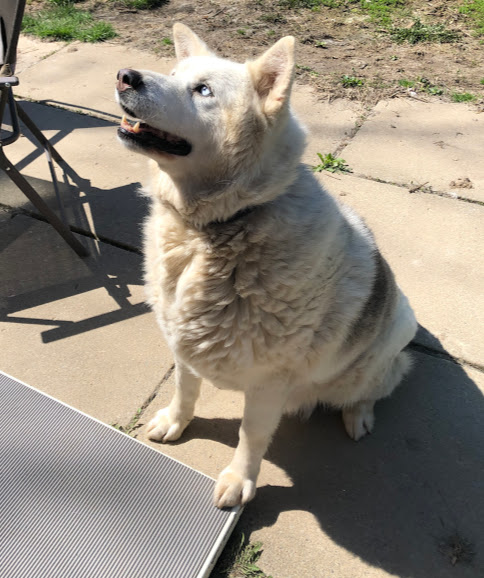
During a routine examination, we met a couple of beautiful female Huskeys, Winter and Bianca belonging to Mark. He loved his dogs so much and wanted the very best for them. They loved being outside more than anything so they spent a lot of time outdoors summer, winter, spring and fall. Mark was under the impression that because they spent so much time outside in the winter they should have a little bit of extra fat covering their bones. He didn’t skimp on their food and liked to keep them a little chubby. However, when we examined the girls, Mark was shocked to learn that they were more than a little chubby and that we were concerned about their health.

As in humans, excess fat can accumulate around organs contributing to a variety of health concerns, including: 

  1. Heart disease
  2. Respiratory Disease
  3. Difficulty exercising
  4. Joint Disease
  5. Skin Problems
  6. Reduced ability to fight infections, 
  7. High Blood Pressure
  8. Diabetes
  9. Increased Risk during anesthesia
  10. Even Decreased Life Expectancy by 2 years.  

Mark was shocked!  “Wow, I had no idea!  Of course I don’t want any of those things for my girls.  I want them to live long healthy, happy lives.  I have noticed that they don’t like to go for walks as much as they used to, but I thought that was just because they are getting older.  Do you think that it could be to the extra weight they are carrying?  What can I do now?”   

We discussed calorie restriction and foods formulated specifically to aid in healthy weight loss.  We didn’t want them to lose the weight too quickly but it was important that they lose it.  We created a nutrition plan specific to each dog which included their daily meals as well as the exact calories in treats they were allowed to eat.  We didn’t want to deprive them of their special treats, just be cautious about how much they were eating.  

“They are always hungry, though.  How can I reduce their feeding size, they’ll starve?”   We discussed that although they may eat all of their food, it may not necessarily mean that they are actually hungry.  We also discussed how some prescription foods will help them to feel full with fewer calories.  

“Another important aspect of weight loss is enrichment” we explained to Mark.  “Sometimes pets will eat out of boredom or just because the food is available.  We will help you to set up an enrichment plan for the girls so that meal and treat time is more exciting for them.”  

We also developed an exercise program for the girls including specific exercises for home when the weather was too bad to make it for a walk and again to encourage enrichment in exercising, rather than the same thing every single day.  

In looking at the whole dog we were able to create a program that included the nutritional needs, exercise needs and mental health needs of each.    

Feeling lighter and more active
We can see a waist

As time went on, we were able to adapt our plans accordingly. Bianca was more stubborn and wasn’t interested in some of the exercises so we worked to find the ones that she did like and added and adapted those accordingly. Winter was more compliant and enjoyed all of the exercises. Mark was able to keep up with the plans we implemented and it wasn’t long before we were starting to notice a waist forming on each of them. Winter lost more quickly but with time Bianca caught up. After 2 years of sticking with their programs, both dogs have decreased their weight dramatically and are much healthier. They can not wait to go on their walks, are walking longer and are not begging for food at all. Mark was happy to announce that he feels fitter and healthier too with all of the walking he is doing with them. Win, win!

Mark does such a great job at taking care of his girls and we are so happy that we were able to contribute to this journey of health.

Has your pet ever had success with a resolution? We’d love to hear about it in the comments!

Author: Dr. Janet Henderson

Uncategorized

Palliative Resolutions in a New Decade

As the new year begins, I am caught contemplating what it will mean for us as we continue to serve you, our clients and patients.  During the past decade my tiny one woman business has grown to a dedicated team which is very passionate about helping pets live their best lives right up until their final days.  I am so lucky to be surrounded by this team on a daily basis, they are all amazing people who truly care about people and animals alike.  All of us have all been working hard to improve our knowledge base and skills through continuing education courses and certifications in order to serve you better.  

My goal has always been to assist you in providing the very best care for your pets.  This year, I hope to be able to do that through an extension of our hours and services.  We have added an additional evening for appointments and in the coming months we hope to have our new tele-health service up and running so that we can help you provide the care your pets deserve, even if we can not make it to you right away.  

Personal and professional growth is very important to me.  Without continual learning and an open-mind we can not reach our true potential.  During recent years, I have been introduced to veterinary palliative medicine and it has become very important to me to assist clients and patients trough these final stages of their journey together.  It is my belief that we have a long way to go in educating people about the benefits of palliative medicine, so as we move forward into the coming decade I resolve to look for as many opportunities to educate as I can.  I will continue to write in this blog but I also welcome opportunities to speak on veterinary palliative medicine to pet lovers and veterinarians alike.  Palliative care has made a huge difference in the lives of many of our clients and patients and my goal is to ensure that everyone who feels the need for this service knows that it exits.  

I’d love to hear what resolutions you have made for the coming year or even decade.  Do any of them involve animals?  Please let us know in the comments.  

Author: Dr. Janet Henderson, Palliative Care Veterinarian

Uncategorized

Stella, the Superstar! *

It was a crisp, cold night and the sky was already black when we received a call about a cat, Stella, who wasn’t doing so well. Her owner, Pam was worried that it was time to say goodbye so we re-directed our route through town.  Although, we were somber we couldn’t help but notice the sprinkling of early Christmas lights twinkling along the way.  

Pam greeted us with tears in her eyes.  She was visibly upset so we gave her some time and just held space.  

“Stella is everything to me”, Pam said.  “My husband passed away a year ago this week.  I’m not sure if I can let her go just now, but of course, I don’t want her to suffer.”

Stella had multiple concerns and had been hospitalized for a week.  She had seemed to recover some but when she came home she gradually went  downhill.  She was barely eating and drinking and wasn’t leaving her comfy bed for much more than to go to the litter box.  She was usually a very active cat, snuggling with Pam on the sofa, going for walks, watching the neighbours from the upstairs window seat and playing with her toys on the main floor.  One of her favourite things was to cuddle up in front of the fireplace but she wouldn’t even make the trek downstairs.  Her quality of life was very poor at this point and Pam knew she couldn’t continue to watch her as she was but she was worried that she was making a decision too soon.  “Maybe my judgement is being affected by the anniversary of my husband’s death, but maybe not, I’m just not sure. Is there anything I can try while I work on clearing my head?” 

We discussed palliative care as well as hospice care and how it wasn’t considered to be curative care. We discussed all of the options available to Pam and Stella and went over what the expectations and commitment would be for each option.

The options that we presented to Pam included

  1. Referral for potential curative care
  2. Medical care with us or her referring veterinarian including more diagnostics and treatments
  3. Palliative treatments at home to support Stella and treat her individual symptoms for a short time to see if it would improver her quality of life. 
  4. Hospice Care through natural death.  Supporting her and preventing pain and adverse symptoms until death occurred.  
  5. Euthanasia

Pam was adamant that she did not want hospice care with natural death for Stella, but she was hopeful that we could improve her life for a short time with symptomatic palliative care before saying goodbye.  

We left Stella to rest and the four of us sat down at the kitchen table to come up with a plan for Stella and her family.  We discussed Pam’s fears and expectations.  We talked about her limitations.  How much nursing care could she provide?  How difficult was it to get medications into Stella?  How much time and money could she provide to care for Stella?  Once we had the answers to all of these questions we formulated a plan that addressed all of Stella’s needs. 

The plan was extensive and included:

  • medications
  • supplements
  • a nutritional plan
  • a hygiene plan
  • environmental adjustments and enrichments
  • safety considerations
  • hydration
  • nursing care

Over the next few weeks we stayed in very close contact with Pam and we made some nursing calls to help her out.  Pam was an excellent caregiver and by the second week there was some improvement but not a lot and Pam decided that she did want us to perform some diagnostics after all.  We went to their home performed an ultrasound and drew some blood and were pleasantly surprised that her pancreatitis had resolved and some of her other values were also showing improvement.  We adjusted some medications and other treatments and Pam kept up her excellent care of Stella.  

Over the next month, Stella gradually improved.  She started eating enough food to actually gain some weight and she was becoming more active and playful.  By spring she was back on her walks with Pam and they had gone on a road trip or two. 

We made several adjustments to Stella’s treatment plan over the months and by the time that summer had rolled around, Stella was back to her old self.  Pam was so happy: “She is perky and playful and chasing the chipmunks in the backyard again!  I can’t believe how well she is doing.”  Her blood tests were checked again and although they confirmed that she had did have chronic disease conditions they were much improved from when we first met her. 

Now, one year since we first met her, Stella is still doing very well and planning her winter get away with Pam and some friends.  She is still on a palliative treatment plan and will remain on one with tweaks and adjustments here and there as her condition improves or declines.  We are so proud of Pam and the hard work she did to take care of Stella and to improve her quality of life.  They are both rock stars in our opinion!  

We are so grateful that we are able to guide Pam and Stella on their journey.  

The greater the obstacle, the more glory in overcoming it.

Molière

Author: Janet Henderson DVM, CHPV